20210101

Brain Fog


Over a decade ago, during an extra-stressful year and for about a year following, my brain did not function properly. I would mess up the most simple tasks with no lack of effort. I would check my schedule, double-check, triple-check, and still somehow end up in the wrong place at the wrong time. I would check my work, double-check, triple-check, and still miss mistakes that my normally detail-oriented self should have caught the first time. I felt so out of control, like some drunken imbecile was inhabiting my body and making me do stupid things. My bosses both of these years had to talk to me about my performance and I just sat there with no explanation, not understanding it myself. It was so frustrating and confusing.

According to The Trauma Practice, brain fog can manifest as...
  • Feeling like your head is cloudy or foggy
  • A general lack of mental clarity
  • Tired eyes
  • A sense of detachment from what is going on in the present moment
  • You might feel emotional quickly
  • You may feel like you have to work really hard to process everyday tasks or think of a simple plan in relation to everyday life.
  • Have difficulty concentrating on the task in hand
  • You feel as if your mind constantly wonders making it difficult to concentrate or focus on what you are doing.
  • You might be forgetful regarding simple tasks like taking your keys with you when you go out
  • You might feel chronically fatigued a lot of the time even if you have had a reasonable night’s sleep.
I regularly experience 10/10 of these. My brain is better now than it was back then, but I've noticed that when I, for example, send an email, I quadruple-check every single detail to make sure I'm not making some obvious mistake like failing to attach the attachment, because I don't trust my brain anymore.

There are studies about the effects of traumatic stress on the brain, but frankly I have too much brain fog to sift through them. In my case it's probably due to actual sleep deprivation, though. I believe sleep deprivation is especially affecting my short term memory lately, but that's a topic for another time...

20200925

WWCPTSDD?


It seems like managing my symptoms has become my entire life. Everything I do, I run it by CPTSD first. What would CPTSD have me do in this situation? 

It might look like I'm just living life like everyone else. But every decision I make, I'm thinking about how it will affect my health. If I stay home from a party, it's because I'm too tired or depressed to be social. If I attend, it's because I know it would be good for me to be social. If I decline drinking alcohol, it's because I'm committed to rigid sleep hygiene rules, but if I have a drink, it's in hopes of reducing stress. 

Sometimes the things I do for health are fun, like dance class. But it has to kill two birds with one stone or it's not worth it. If something fun will be mainly detrimental to my health, that's not the kind of fun I can have. Junk food is usually out because nutrition is one area of my health I can actually (sort of) control. Things like travel, spontaneous plans, and loud parties can are often too stressful to be worth any benefits they offer.

Of course, this is somewhat true for everyone: We all make decisions based on what we think will be best for us. It would just be nice to get off the bottom rungs of the hierarchy of needs more than occasionally.

20200704

INTP vs CPTSD


I have often found myself wondering whether this or that behavior of mine was just my personality or a symptom of CPTSD. But it's both. CPTSD affects everyone differently. It brings out the worst in your natural characteristics. So if you are naturally shy, you might become overly withdrawn. If you are naturally aggressive, you might become controlling.

But then there are things about CPTSD that are so opposite from my personality. I'm not very emotional personality-wise, but then I have these crazy mood swings that I desperately try to reason myself out of.

Split Personality | Murals in Short North area of Columbus | Alan ...I'm pretty low-maintenance according to my personality, but CPTSD is a terribly high-maintenance disorder. This has gotten me into trouble because I tend to, for example, move across the country or out of the country somewhat spontaneously, figuring it'll all work out. I don't mind uncertainty, but CPTSD does not like uncertainty at all. Or I'll work a long day and not take enough breaks. Bad idea with CPTSD. So I've had to become this really annoying person who needs to know what the plans are exactly, and I need to be back by nine so I can do my sleep routine so I can function tomorrow. It's like I'm two different people in one.

So I don't blame people when they can't handle being my friend anymore. I have friends with mental disorders that I limit contact with because I can't handle their symptoms for the sake of my own mental health, or simply because their symptoms make them not fun to be with. It sucks. But I get it.

20180421

Work

Since I'm lucky enough to have some flexibility in my work schedule, I have purposely arranged to not begin work until late morning -- but I'm still late to work almost every day. This is a typical day for me: I wake up exhausted, lethargically get ready, and struggle to focus all day while pretending I feel better than I do and trying not to murder anyone or jump every time the phone rings. Then I come home and have to lie down.

Managing my health is a job in itself, but since I'm still able to hold down a job, I won't qualify for disability. People like me fall through the cracks because we're too high-functioning to get help but not functioning enough for gainful employment. Instead, I force myself to work thirty hours a week to keep my benefits (and some semblance of a sufficient income), because even when I haven't slept at all, I am somehow able to function satisfactorily enough to not get fired yet. I say "yet" because I'm rather overdue. I have been at my current job for almost three years, which is twice as long as I've lasted anywhere else. The flexible hours are a big part of why I've lasted so long, but it seems to just slow the inevitable -- I'm counting down the days until I burn out. But what scares me more than losing my job is the prospect of continuing to function just well enough to be a mediocre, miserable employee for years to come.

Thankfully my supervisor is very understanding, and even now I could theoretically work anywhere between twenty and forty hours, depending on my needs. But the needs are too many. How can I survive (financially) on twenty hours? And how can I survive (physically) on forty? So I compromise with just enough money to get by and just enough energy to keep going, which is not much of a solution.

My previous pattern was to move somewhere far away every year or so, which afforded me a little "vacation" of unemployment until I found another job that would eventually burn me out. I have no desire to return to that pattern, but I also have no desire to spend all my PTO on a health staycation as a last-ditch effort to keep my job, so I have to get better. I am going to a new holistic medical center in a couple of weeks, so hopefully they will be able to help me.

20180310

Emergency Preparedness


With all the disasters and violence the world keeps having, I keep hearing about emergency preparedness. But I have no use for that. I've been too busy surviving from day to day to make survival plans for some hypothetical situation. Besides, catastrophes provide opportunities for death, which would be a relief. And anyway, as much as it would probably compound my already complex PTSD if I survived it, a catastrophe sounds preferable to regular life.

When people talk fearfully about the big earthquake we're supposed to have, my main emotion is excited anticipation. What am I, some kind of sicko? And it's not like I really want that to happen. But if there's a natural disaster, violent actor, terrorist attack, etc., at least in that moment, I would just be in survival mode, and that's it. I wouldn't be in survival mode AND expected to show up for work and maintain relationships and try to act normal at the same time, which is thoroughly exhausting. My body wouldn't be trying to save me while my mind is trying to go about daily living.

It sounds so wonderfully simple to have my only goal be staying alive. (And in fact I have experienced this magical laser-sharp focus in a recent near-collision, feeling no fear in the moment because finally this was a situation I knew how to handle. If there's one thing I'm good at, it's staying alive. It's all the moments before the storm that are terrifyingly, unconvincingly calm.) If I really were in an emergency, then my body and reality would match again. And if I can't convince my body to match reality, the next best thing is for reality to match my body. Besides, being alive and committing suicide are both unpalatable to me, so death by accident would be a very convenient way to get out of both of those unpleasantries.

I know it probably wouldn't really be a good thing, but regardless, disaster preparedness is just not a priority. There is no future when it's all your mind can do to deal with the present and your body is stuck in the past.

20180224

Welcome to My World


Every time there's a natural disaster or mass shooting or other terrible tragedy, I feel almost desensitized to it. Not really desensitized; it's more that I'm hyper-aware of every single danger in everyday life, so when something really bad happens it doesn't shock me like it seems to do to other people -- it's exactly what I'm expecting every day. I'm more surprised when bad things don't happen, and I always feel like I've only barely escaped them and there's still tomorrow and there is no safety.

In fact, in times of tragedy, I feel a sense of relief or... like the universe is finally aligned to my experience of reality because now everyone else feels how I feel every day, notices what I notice every day, is sobered into awareness like I am all the time... every time the sun forces its blinding light into my eyes without my consent, every time the phone screams at me its sudden demands. Those everyday things put me on high alert already.

CPTSD can change sufferers' worldviews so that they expect hostility even when it makes no sense. Sometimes I find my mouth offering profuse apologies over trivial matters (things that don't require apologies, things that I'm not even responsible for, etc.) because I expect that I have to appease seemingly kind and reasonable people before they randomly and abruptly turn on me. I'm surprised when everyone I meet doesn't turn out to be a mass shooter.

20171226

Why I Hate Jenga

I used to enjoy the game, back when it was just a game. Carefully pulling out a wooden block from a tower of wooden blocks and placing it on the top, trying to build it as high as you can while it becomes proportionately more unstable, eventually toppling over. Now they even have -- I'm not sure what to call it... My Size Jenga? -- that's as big as you are. Ha. I'll show you life-size Jenga...

I'm already sleep-deprived, but if I take out the medication block, will tomorrow morning build my tower higher -- or destroy it? And which block should I choose -- the pill that frequently doesn't work, or the one that reliably works too well? Now I overslept; should I knock out the breakfast block in order to make it on time to work? Of course it would be safer to sacrifice the doing-my-hair-and-makeup block... except that my looks are the only part of my tower that is still relatively stable. Can I really bear to poke holes in the entire thing? Do I really want to build a tower to the sky if that tower is entirely frail?

Should I pull out the block of dignity and reach out to a friend during a flashback? It might build the tower of friendship, but will that friendship go toppling over when I really need them? And which side should I pull from -- the old friends who are probably tired of dealing with my same old issues, or the new friends who might be weirded out? What can I afford? What is going to get the best ROI?

Do I pull the block of stability out of my current living arrangement (renting a cheap room) and place it on the tower of mental clarity that the peace of my own place would afford me? Because the last two times I tried that, it came crashing down and I had to start over. Do I work thirty hours just to get benefits, even though it would be healthier for me to work about twenty? Do I push it to forty and sacrifice the block of health to build the career tower? Because just about every time I've tried that, it all comes tumbling down. No matter what I choose, I'm in a precarious position and my life is perpetually on the verge of ruin...

I used to be a believer in Spoon Theory, but I think this "Jenga Theory" is rather more accurate for me. Spoon Theory does a good job at showing how there are never enough resources, but Spoon Theory doesn't depict the risks involved with choosing one spoon over another, nor the consequences of making the wrong choice. My life coping strategy is similar to my survival strategy when I was in graduate school: Eat on Mon/Wed/Fri, sleep on Tue/Thu/Sat, breathe on Sunday. I try to balance what I'm sacrificing so that it's not always the same area suffering. But something always suffers, always.

20171105

Medication is Complicated


For a long time I was reluctant to medicate because I didn't know I had CPTSD and its flavor of insomnia; I just thought I must not be practicing good sleep hygiene, I must not be getting enough exercise, I must be doing something wrong, not trying hard enough. I've tried a lot of natural supplements for sleep, but they had no noticeable effect. Same with over-the-counter sleeping pills.

Over the years I've taken Trazodone for sleep off and on. Trazodone is an antidepressant, but it's used for insomnia in low doses. It's not a simple fix, though. Trazodone is supposed to be taken on an empty stomach -- but then I have that whole night eating problem, so that usually wouldn't happen, which might have interfered with its effectiveness. Whatever the reason, I could not get a consistent result with it. I experimented with the dosage but still couldn't figure it out. Sometimes it would not seem to do anything on a full dose, and other times even a half dose would quickly sedate me and last through the next morning.

Timing was another issue. Taking the medication too late at night would ensure morning grogginess, so it needed to be taken at least nine hours before I needed to wake up in the morning. But Trazodone would make me groggier if I took it too many days in a row, so I tried to take it only when needed, and by the time I couldn't sleep, it was already too late to take the drug. Also, there was only a short -- maybe 15 minute -- window in which it would make me sleepy, so if I missed it, I was out of luck. I ended up saving the pills until after a severe episode of sleep-deprivation for a bit of respite, which was hardly a solution.

I tried Ambien for awhile and it was effective for onset insomnia, but I would wake up at 4:00 a.m. every morning. Also, I understand it's not a great long-term solution since it's addictive and the sleep is less natural than one you would get from an antidepressant.

Now that I know there is a very real and valid reason for the chronic insomnia, I am on a mission to find a medication that will work for me even if it has to be long-term. Recently I began taking another antidepressant for sleep called Mirtazapine. Unlike Trazodone, it's meant to be taken every day, not just at times of sleeplessness. One of the side effects is increased appetite, which for me is a good thing. My doctor told me to give it a week because there may be some morning grogginess initially. I took it for seven days and had no problems getting to sleep, but I felt extremely sedated every morning. After that I tried taking half doses. I still felt way too sleepy in the morning, even after it made me sleep ten hours. Then I tried cutting it down even more, but I felt strangely restless at night.

Then my doctor prescribed Nortriptyline, another antidepressant at a low dose, and I couldn't tell that it did anything at all. Doubling the dose gave me that strange restless feeling. Theoretically I could have kept trying different things until I found something that worked better, but in real life I was barely functioning and couldn't risk going on like that. So I went back to the Mirtazapine. I figured feeling tired all day long was better than feeling tired all day long and tossing and turning all night.

What this means for my life is no more alcohol and I'm done for the night at 9pm. It's a trade I will gladly make if it means sleeping regularly (and I already hardly drank for sleep hygiene reasons). Thankfully I don't feel so sedated during the day this time, so maybe my body is adjusting to it or maybe I was just super tired before.

In conclusion: Medication is not a quick or simple or airtight fix.

20170923

Food and Sleep

"...too tired to eat, too hungry to sleep..." - Nada Surf, "See These Bones"


In my quest for sleep, I have joined a gym and also started taking dance classes (in addition to weekly salsa practice), thinking that maybe I could induce sleep by wearing myself out. But so far the insomnia persists, and I am realizing more and more how much my sleep issues are tied to food issues. I knew I had some food issues, but I had convinced myself I just didn't like food (which is not entirely untrue... I've never been terribly interested in food).

Eating disorders have been linked to traumatic stress disorders. I have a new therapist now because my insurance changed, and she calls my eating behavior an eating disorder because "any time you use food to control, it's an eating disorder." I'm not sure about that, and sometimes it matters what we call it, but in this case I don't find the label helpful -- I just want to fix it. We started doing EMDR for food issues, so I'm making a point to be mindful of anything I notice around food.

One thing I've noticed for awhile now is that it's hard for me to identify when I'm hungry or full. Sometimes it's due to upset stomach (another symptom of CPTSD), which can make me feel like I have no appetite. As a result of being so out of communication with my body, I tend to make food choices based on what I think I 'should' do -- what's healthy, what's inexpensive, what's the 'right' time, what's the 'right' amount -- regardless of appetite. I also noticed that I'm constantly holding my stomach in, even while I'm eating. I'm sure that's not helping my stomach issues! One of my worst food habits is binge eating late at night. I almost always do this, and the insomnia is often worse if I don't.

In addition to physical issues, I noticed that I feel a lot of shame surrounding food. I didn't realize until I heard myself say it out loud that I feel embarrassed that my body requires fuel to function instead of just being able to run off willpower, and that eating three meals in one day seems like an absurdly luxurious indulgence. I also alternate between indifference and anxiety about hunger. I simultaneously feel like I must eat and I shouldn't eat, so I'll either eat way past full or else skip meals. I guess this is where the need to control comes in.

My therapist suggested doing breathing exercises from the belly to practice releasing my stomach, and she put me on a diet of intuitive eating: "eat whatever you feel like"! This is hard for me: First of all, I usually don't know what I feel like eating because I have convinced myself that I don't like food. Plus, now I have to acknowledge my needs and wants, which brings back the shame of having them. It's hard enough to admit that I need food, but wanting food is just gross to me, especially if it's something unhealthy. For me to admit wanting food, I usually have to make a joke about it.

I am learning to trust my body, though. My body tends not to crave unhealthy foods, but I often would force-feed myself unhealthy foods I didn't even want just because they were available, due to the panic about being hungry. And listening to my body is applicable to more than just hunger. Since I've been eating intuitively, it's been easier for me to rest or exercise when that feels like what I need in the moment. And if my body for some reason lies to me and tells me to eat an entire package of Oreos in one sitting, my brain still has veto power -- so there's no reason not to listen to my body.

20170701

Organizing Chaos

 
This whole blog has been very difficult to write, because I'm trying to make sense of something that is so... well, complex. I'm trying to focus on just one aspect per post, but they are so interrelated, it's hard to isolate one symptom from the rest. It can take me hours to write one post. If I want to write about having a total meltdown on a work trip, do I classify that under hyperarousal, sleep deprivation, affect dysregulation, travel, or career?

In the end I have a tidy little post where everything seems so clear and simple, which it isn't at all, but I need to organize it.

20170423

Chronic Insomnia

Well, just as the physical fatigue left, insomnia stretched out into its place.

(First of all, a tip: If someone complains of chronic insomnia, do not well-intentionedly ask them, "Well, have you tried melato--" Yes. Yes they have. That was the first thing they tried. And it didn't work, and neither did the next five things you're about to recommend even if your coworker's sister's friend's husband swears by it, and reminding them of this is only adding to their frustration. Sleeping pills can work temporarily, but they bring their own complications. Anyway, PTSD insomnia is not regular insomnia, so the same treatments might not help.)

The word "insomnia" has different associations for everyone because we've probably all experienced sleepless nights to varying degrees. But what might be merely annoying and inconvenient to an occasional sufferer can be crippling and dangerous to someone with chronic insomnia. It's completely debilitating. Life tuns into an attempt to make it through the week -- and this is just one symptom. Combined with other symptoms of CPTSD, it can be hell.

If you've never experienced severe sleep deprivation, let me try to explain what I experience when it's extreme: My senses seem dulled, or I might get sensory overload very easily. I start processing English word-by-word, as if it is my second language. My body starts twitching. I get very irritable and think unreasonably negative thoughts. (On the bright side: my math skills improve. Your results may vary.) Even when I'm this tired, I still might not be able to get much sleep.

I have long been aware of how much insomnia steals my life away. Often I hesitate to make plans far in advance because I have no idea if that's going to be a good or bad week for me in terms of sleep. When I do have plans, the choice for me is usually canceling them, missing out and letting people down, or attending like a zombie and not having or being much fun.

If stealing my life wasn't enough, lately it has become more apparent to me how much sleep deprivation changes my very personality. I'm not terribly social to begin with, so when I'm tired, my social energy is the first thing to go. Interacting with other people is too high up the hierarchy of needs when you're just trying to stay awake and remember your native language. So I don't even feel like myself anymore.

I'm so used to insomnia after having it be my "normal" for so many years that I didn't even realize what a big problem it was until it started interfering with my activities to the point that I could no longer participate in them at all. For many years, waking up tired, fighting to stay awake at work, and yawning my way through evening activities were just a given.

Some times are worse than others, but I recently had a couple of weeks that were so bad, I had to flake on all my commitments except for work. I decided sleep is my new hobby, since I demonstrably can't do anything else anyway, so I made a Sleep Action Plan with a strict diet, exercise, and sleep hygiene regimen. Hopefully it will help and I will develop some habits that will stick around until I don't have to make them my main focus anymore and can actually have my life back to some extent.

20170301

EMDR Therapy


EMDR stands for Eye Movement Desensitization and Reprocessing. It involves following the therapist's fingers (or lights) moving back and forth with your eyes. It sounds like hypnotism, but the patient is not getting sleepy -- they're focusing on traumatic memories. There's more to it, but I won't go into the details. Although EMDR sounds weird, it has surprisingly been found to be one of the most successful treatments for PTSD.

No one understands exactly how it works, but the eye movement mimics REM sleep, which helps integrate experiences in long-term memory so that the patient is not constantly reliving the past. Something about the bilateral stimulation helps to connect the left and right brain.

I tried to focus on memories while tracking with my eyes but I'm a terrible multitasker, so Z tapped on my knees instead, alternating left and right. It still provided bilateral stimulation of the brain, but it worked a lot better for me since I could just close my eyes and focus on one thing. EMDR is a very strange activity, though, and it felt a bit silly since I could never tell if it was doing anything in the moment.

We did EMDR almost every week for several weeks, during which time my symptoms seemed to be worse, if anything. But sometime after the last session, I was suddenly doing a lot better. Some people experience immediate relief even after one session, but everyone is different. Z says the EMDR therapy could have helped to "loosen" things up, and maybe that's why it took awhile to experience the effects of it.

20170130

Improvement!

I'm happy to report that I've been doing much better! During these past two years of chronic fatigue, it has not been uncommon for my energy levels to fluctuate somewhat. Occasionally I would even have a streak of two whole days when, for whatever reason, I felt normal... but then, for whatever reason, I would be back to exhausted again. I was always at the mercy of my health (or lack thereof) and it was always unpredictable. But about a month ago, the fatigue disappeared almost overnight and hasn't come back!

For such drastic change, an obvious explanation is surprisingly absent. Was the EMDR therapy successful? Is Vitamin D that powerful? Was it supernatural healing? Was it a combination of factors? The only thing I can put my finger on that seemed to shift something for me was reading Van der Kolk (of course) on what actually works to heal the effects of trauma (and what doesn't work). He explains that while the rational brain expresses itself in thoughts, the emotional brain expresses itself physically. So while you can rationally understand your feelings, you can't think your way out of them. No wonder I wasn't getting anywhere! I had done some research on neuroplasticity and was always trying to practice positive thinking in order to rewire my brain. And while I'm sure positive thinking beats negative thinking (in the way that a bandage helps more than reopening a wound), what Van der Kolk is saying is that telling yourself nice things isn't effective in the long term because even if your mind believes you, your body doesn't! You must first convince your body that you are safe. This can be achieved through EMDR, yoga, martial arts -- anything that helps one reinhabit and take control of their own body, ideally with healthy social support.

In the past when I've had energy, I would take on too much (which I now recognize as flight mode) and burn out, which I'm sure is why my body shut down. Even though I'm glad to have my life back, I have learned that my health is not something I was forced to focus on temporarily in order to get back to flight mode... it's something I need to continue to prioritize. So I'm glad I'm able to work thirty hours now, but I'm not going to push it to forty yet. I'm going to serve in church again, but monthly instead of weekly. Now that I have my energy back, I'm putting it towards establishing healthy habits like meditation and yoga instead of wearing myself out. My next area of focus will be sleep.

Now that I am better understanding my body and what it needs, I feel more in control of my health. If my symptoms flare up again, I will be more equipped to treat them instead of being debilitated. I'll probably not post as often anymore, but I plan to update this blog as long as I have things to say. Thanks for reading.

20170122

It's Not About Politics

...Okay, for some people it is. But when a politician doesn't even pass the smell test, I can't hold my nose long enough to evaluate his policies.

I'm really not into politics. I usually vote halfheartedly, shrug, and move on with my life, but this election left me grieving. I didn't want Clinton either, but I think if she won I would have been able to shrug and move on.

I'm not too worried about what Trump is going to do (and thankfully I have that luxury). I doubt he can oppress me more than chronic insomnia and fatigue already have. There will always be nutzos out there, some far worse than him. What's terrifying is the cultural climate that allowed our nation to actually honor one of these nutzos with the highest office in the land. It's the symbolism of this that scares me more than the reality. It's the messages this sends. Men have been told, Do whatever you want -- you can get away with it. Women and minorities have been told, You don't matter. The GOP has been told, You can offer poop on a stick and we will hold our noses and swallow it.

The reason "locker room talk" is so disturbing is that it's not just talk. When you have been a frequent victim of sexual harassment (if not assault) from puberty (if not earlier) until present day (as I, and I would guess most women, have been), those comments are not merely vulgar -- they threaten your daily existence. And such abuse was happening regularly before the election. Where is safety, now that this attitude has been normalized at the highest level? Is there no base level of decency?

Abuse is not about force (although it often involves force). Abuse is about control. It always requires an imbalance of power. Women as a whole have less power than men and are therefore vulnerable to abuse. And we have just given an enormous amount of power to a man who demonstrably abuses it. So many PTSD sufferers are actually triggered by Donald Trump becoming president, and this is why. (I am not one of them, but I understand it.)

Telling people to get over it and move on is asking the impossible and is maddeningly condescending. Isn't that what every survivor desperately wants to do: forget it and move on? How do you get over something that's still got you by the pussy? (Sorry, was that offensive? Didn't seem too offensive on election night.)

20170112

"It's All in Your Head"

I caught some horrible stomach bug, so for the last couple of days I've been alternating between sleeping and throwing up. It's possibly the worst case of nausea I've ever had, but it's still preferable to the daily challenges of CPTSD. People are so sympathetic to this sort of thing because they can relate to it... because it'll be all better in a few days... because it's not too uncomfortable to talk about. Sometimes I wish I had cancer so I could just die already instead of being half-alive. No one questions cancer.

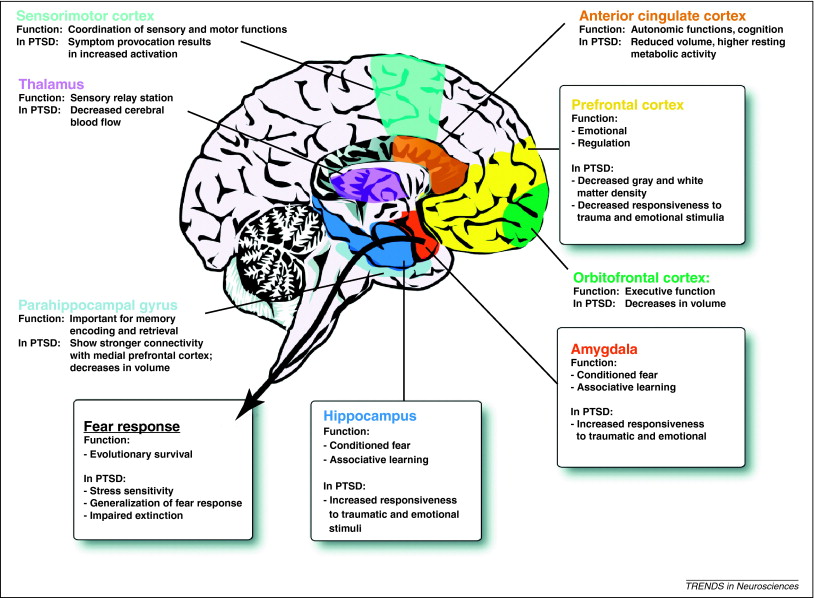
Yes, it's in my head. That's the problem. Mental problems ARE physical. When did my brain stop being a part of my body?

http://www.cell.com/trends/neurosciences/fulltext/S0166-2236(11)00103-2

And actually, it's not all in my head -- chronic stress affects the rest of the body, too. According to van der Kolk, "...attempts to maintain control over unbearable physiological reactions can result in a whole range of physical symptoms, including fibromyalgia, chronic fatigue, and other autoimmune diseases" (The Body Keeps the Score, p. 53). I think I'm going to end up quoting this entire book.

20170105

Depersonalization

"Traumatized people feel chronically unsafe in their bodies: The past is alive in the form of gnawing interior discomfort. Their bodies are constantly bombarded by visceral warning signs, and, in an attempt to control these processes, they often become expert at ignoring their gut feelings and in numbing awareness of what is played out inside. They learn to hide from their selves" (p. 98-99).
"Research confirms what our patients tell us: that the self can be detached from the body and live a phantom existence on its own" (p. 102).
- Bessel van der Kolk, The Body Keeps the Score

Last week I wrote about hyperarousal causing oversensitivity, but another symptom of CPTSD is quite the opposite: dissociation. It's common to yo-yo between the two states as shown below.


Dissociation is the symptom that I understand the least. One is in a dissociative state when they are disconnected from their environment, memory, time, senses, and/or emotions. When dissociation distorts identity, this is called depersonalization.

All symptoms fall on a continuum, and on the extreme end of depersonalization, sufferers feel that they are outside of their bodies and looking down on themselves from up above. (I have never had this experience and frankly it seems like a superpower. I don't understand how it would even be possible for someone like me... I'm terrible at spatial reasoning, so I would probably do it wrong and end up looking at a Picasso'd version of myself.)

http://www.psych2go.net/psychology-behind-depersonalization-disorder/
For me, it's more accurate to say I felt trapped inside my body rather than floating outside it. It felt like my body was a robot that was programmed to live my life for me. This robot would go through the motions for me, while I was lost somewhere else or perhaps dead.

I remember looking in the mirror and seeing what appeared to be a person, marveling at what a convincing optical illusion it was. I picked up my own arm to feel its impossible weight -- just like the arm of a real person! I pored over it, amazed by the lifelike details of each freckle and vein. Whoever made this body was extremely dedicated to their delusion! I knew there was no person there. I knew I didn't exist. So I couldn't fathom how this reflection in the mirror could breathe on its own, because empty bodies can't do that. It was some crazy magic. People would talk to me and I would be surprised they could see me because I knew I wasn't really there. It would take about seven years after this symptom began before I would be certain of my own existence.

Another way depersonalization affected me was that I was detached from my own sensations and emotions. It was difficult for me to identify hunger, thirst, fatigue, or being too hot or cold, and it could take a full twenty-four hours to realize I was angry about something.

I've made a lot of progress over the years, but I sometimes forget that life is a story I'm in, not a movie I'm watching. I'll accidentally ignore people or neglect tasks, not because I forgot about them, but because I forgot me. And I still feel somewhat out of touch with my body and my own feelings. First I must become aware that I'm experiencing a feeling. Then I must identify what it is; for example, discomfort. Then I must discover the source of the discomfort: overheating. Even then, it may not occur to me that I have the ability to remedy the situation, such as using my arms (yes, they are really my arms) to remove my jacket. This whole process should be able to happen absent-mindedly, but for me it often requires intentional effort.

20161228

Hyperarousal and Sensory Overload: Do Not Mix

"I feel like life is a bunch of jump ropes all going at once, and I have to try to jump in without getting hit by any of them..."
I just found that quote in a journal I started years ago in an attempt to process the mysterious changes that were taking place in how I experienced the world, long before I recognized the connection between these symptoms and the trauma that brought them. At the time, I was noticing more and more that my mind seemed overactive and I felt overwhelmed by activities that were previously mundane, like shopping. Now I know that I was suffering from hypervigilance.

Hypervigilance belongs to the symptom cluster of hyperarousal, which also includes heightened startle response, difficulty concentrating, irritability, risky behavior, and insomnia. Last night the first three threatened to ruin my evening. (I was already tired and feeling like I was done for the day at 4:00 p.m., but I didn't want to cancel my dinner plans because I am so tired of CPTSD stealing my life. In hindsight, I probably should have because I think the tiredness made me more susceptible to being on edge.)

I was at a loud, crowded restaurant: people bustling around, lots of noise, candles flickering. My brain politely informed me that I was in a safe and enjoyable place, but my body wasn't having it. The environment felt hostile, like everything was conspiring to crush me into the wall and set me on fire and the whole place was yelling at me. My friend ordered for us both because I couldn't focus enough to make sense of the words on the menu. I only began to feel calmer when I tasted a very gingery drink. It seems like that should have overloaded my senses even more, but it actually helped me to focus on that one sensation and block out the others. (The whiskey probably didn't hurt either.)

I'm not afraid of roller coasters, but I absolutely hate them because the one time I went on one, I felt like I was in hell. My body was being thrown around outside of my control and my brain couldn't possibly process everything I was sensing fast enough to be able to anticipate what was coming next or perceive potential threats, and -- worst of all -- there was nothing I could do to stop it. I coped by closing my eyes and trying to imagine I was somewhere else and waited for it to be over. When your body is constantly terrified, you don't need to seek thrills.

There are some high-stimuli situations in which I can be just fine or even have a really good time. For example, I've been to live punk rock and heavy metal shows that were fun, and as a teenager I found moshing to actually be therapeutic. This kind of atmosphere would appear to be much more volatile than a restaurant or shopping mall, but I think what makes stimuli stressful is 1) lack of agency over it and 2) multitasking. A crowded grocery store will stress me out because I'm attempting to simultaneously select my items while avoiding small children with my cart, whereas at a concert with much more intense sights and sounds and movement, I can just enjoy it because that's all I went there for.

20161220

What We Call It Matters

My first counselor had probably twenty years of experience. She ignored the trauma and said I had a mild depression. Her philosophy was that we could spend hours analyzing the past, but it would be a better use of time to just focus on the positive and move forward. She recommended that I plan some fun activities to look forward to. At the time I didn't know anything about different therapies so I went along with it, but I felt like I was at the doctor's with a festering wound and was being told to diet and exercise. This approach blows my mind now. It may be appropriate for someone who has a mild depression with no cause, but to completely disregard trauma is uninformed. There is no moving forward when the past has chained itself to you. Many psychotherapy patients have been traumatized, so it seems to me that all mental health professionals should be highly trained in recognizing and treating trauma survivors.

My second counselor was a graduate student under the supervision of my previous counselor. She was obviously trying out a variety of techniques she was learning and not all of them worked for me, but overall I made much more progress with her despite her inexperience -- or maybe because of her inexperience, she was more open to trying different things.

My next counselor, also a grad student, exhorted me to have more faith and eat more avocados and get prescription sleeping pills. Only the last advice was helpful.

My next therapist lasted three sessions: the first one was introductory, in the second one she told me about some approach that sounded like pseudo-science, and in the third we watched Dr. Phil. I walked out at Dr. Phil and gave up on therapy until my doctor recommended another practitioner and encouraged me to try again.

My current therapist, Z, is the best so far. But if I use the term Complex PTSD, everyone who works at these places acts as if they didn't hear the first word. If it's not approved by the American Psychiatric Association's inclusion in the DSM, it doesn't exist. (I understand why they can't officially diagnose it, but I feel like they would indulge me more if I walked in there and said I was God or a squirrel! It's so bizarre.) But Z is the one who recommended that I read the book Trauma and Recovery by Judith Herman, so I believe she agrees with Herman's view.

Herman is the one who first proposed Complex Post-Traumatic Stress Disorder as a freestanding diagnosis. I thought this must be a new book, because I never even heard of CPTSD until last year. I checked the copyright date: 1992!? Are you kidding me? Why is this still not legitimized?! Herman sheds some light on why it's so difficult to accurately revise the DSM: Members of the APA from a vantage point of empowerment don't see the need for a diagnosis that necessarily applies to the disempowered. When women presented rational arguments, "The men of the psychiatric establishment persisted in their bland denial. They admitted freely that they were ignorant of the extensive literature of the past decade on psychological trauma, but they did not see why it should concern them" (p. 118). Basically, empowered people assume psychological maladies cause traumatization rather than the other way around, which puts the blame on the victim instead of the perpetrator. (Of course, men can be victims too. Herman explains it much better than I do. It's an excellent book. I would read it for her crisp writing alone.)

Maybe if CPTSD was officially recognized, I would have gotten help sooner. Not to mention the added stress involved when your actual problem supposedly doesn't exist. Gaslighting is what contributed to CPTSD for some of us in the first place, so the APA needs to stop rewriting our reality.

20161213

Hijacked

Over the weekend I experienced the worst flashback I've had in months.

I had arrived at a volunteer event in a cheerful mood, but I was soon accosted by five different triggers in quick succession. It was overpowering. The best way I can describe a flashback is that it feels like I'm being hijacked, like some idiot has taken over my body and I'm just along for the ride and don't know what's going to happen next.... but the hijacker is invisible so I don't understand what's going on; all I know is that I've inexplicably lost control of the aircraft and we're going down.

According to Pete Walker in Complex PTSD: From Surviving to Thriving, CPTSD flashbacks differ from PTSD flashbacks in that they can be purely emotional, without any sensory phenomena. I was surprised to observe myself rapidly becoming unduly frustrated and irritable, to the extent that the surly comments that normally get filtered by the brain were instead fleeing out of my mouth. Not exactly how you want to present at a church Christmas volunteering event. At least no one got beaten with a roll of wrapping paper.

So why was my brain's filter missing in action? I read recently in The Body Keeps the Score by Bessel von der Kolk that during flashbacks, the right (intuitive) side of the brain is activated while the left (analytical) side of the brain is deactivated. That's why I don't realize I'm in a flashback while it's happening. I just felt like everyone was the enemy and I had to get out. My arms grabbed my coat and my mouth said I was done and my legs walked out... apparently I was leaving.

I sat outside, thinking, Well, here I am again, quarantined. How many times have I had to bail on life due to the grip of these symptoms? How many bridges have I burned because I've acted in ways I couldn't control? But this is my life, and participation in it now looks like playing brain games on my phone (to help reengage my left brain) and listening to guided meditation and doing breathing exercises. Luckily I'm unlikely to see those people again.

This experience taught me that I need to have a plan for dealing with triggers. It's impossible to anticipate every trigger, but just having an exit or timeout strategy before entering unpredictable situations could help maintain self-awareness to prevent losing control.

20161205

Handling Stress

With a stress disorder, the stress-o-meter is permanently maxed out because the body must deal with past and present stress simultaneously. As shown in the image below, there's just not a lot of room for extra stress. (I'm not sure why PTSD is sandwiched between good and bad stress in this image... good and bad stress are both in the present, while PTSD deals with the past, so it seems like that should go in the cup first.) At times in my life when I've been in long-term stressful situations, my symptoms have increased. And earlier trauma may have made me more susceptible to developing CPTSD in the first place.

my cup runneth over

Since I didn't know what was wrong with me for so long, I would try to live a "normal" life (or even push myself to the limits) and didn't understand why things seemed so much harder for me than for other people. Now I have learned that I have to be a lot more careful with how much stress I allow in my life so that I don't burn out.

During periods when major life stressors were few and coping resources were many, I was able to make significant progress in recovery. I haven't struggled with self-harm or suicidal preoccupation in years. I don't depersonalize to nearly the extent I used to, and I have very little tolerance for toxic relationships. Flashbacks don't occur as often and are easier to manage. But while these symptoms have decreased, other symptoms have taken their place. Insomnia seems to be worsening, and over the past two years or so, fatigue has been creeping steadily into the foreground. (Insomnia and fatigue are not always included as direct symptoms of CPTSD, but they can result naturally from the other symptoms -- for example, hypervigilance is exhausting.) For about a week the fatigue was so bad, even insomnia couldn't take it, which was an odd relief. Some days I am too tired to do basic daily tasks like cooking. Some days (like today) I already need a nap before I even go to work in the morning. It's a downward spiral because the more the symptoms interfere with my life, the more they reduce my coping resources, and the fewer coping resources I have, the more my symptoms run wild. Right now my focus is on getting my energy back because I can't really do anything without it.